
Reflection of light
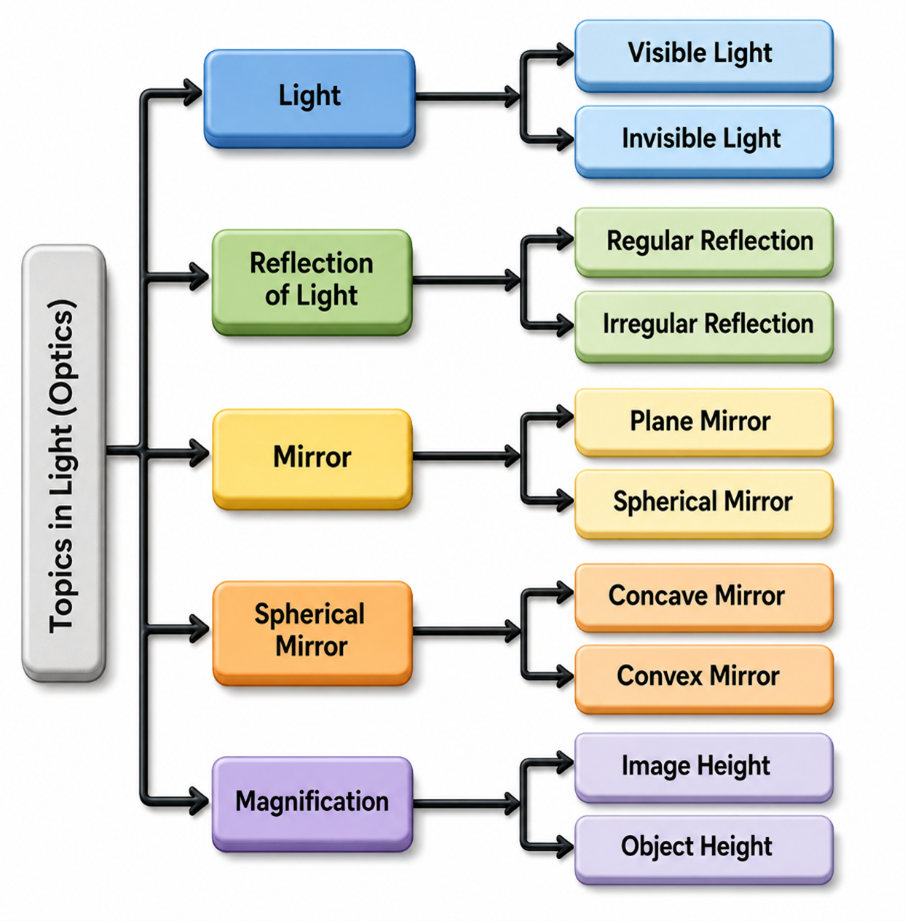
Light
Light is a form of energy that enables us to see objects. The speed of light depends on the medium through which it travels.
Speed of light in vacuum : 
According to Max Planck, all kinds of light are produced due to electromagnetic effects. Therefore, light is called an electromagnetic wave.
Light is of two types:
➢Visible light
➢Invisible light
Visible and Invisible Light
Visible Light
Visible light is the light that illuminates objects and can be seen by the human eye. The wavelength of visible light ranges from 400 nm to 700 nm.
Examples: sunlight, hurricane lamp light, torchlight.
Invisible Light
Invisible light is the light that cannot be seen by the human eye and does not illuminate objects visibly. The wavelength of invisible light is below 400 nm or above 700 nm.
Examples: ultraviolet rays, X-rays, gamma rays.
Reflection of Light :
When a ray of light travels from one medium and falls on another opaque surface, and a portion of the light returns to the previous medium, the phenomenon is called reflection of light.
Reflection of light is of two types:
➢Regular reflection
➢Irregular reflection
Reflecting Surface :
The surface from which light rays are reflected back is called a reflecting surface.
Reflecting surfaces are of two types:
➢Smooth surface
➢Rough surface
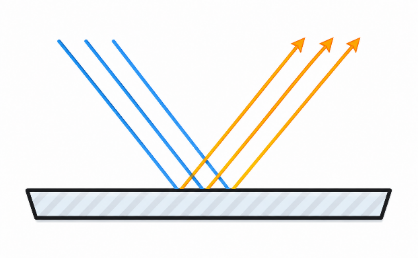
Regular Reflection :
When a bundle of light rays falls on a smooth surface and, after reflection, the reflected rays become parallel, convergent, or divergent, the phenomenon is called regular reflection.
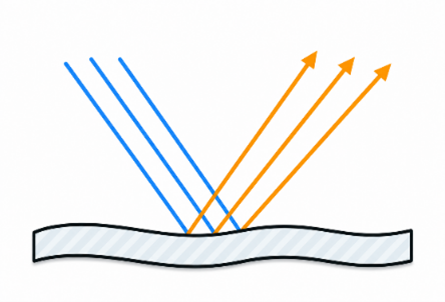
Irregular Reflection :
When a bundle of light rays falls on a rough surface and, after reflection, the reflected rays do not remain parallel, convergent, or divergent, the phenomenon is called irregular reflection.
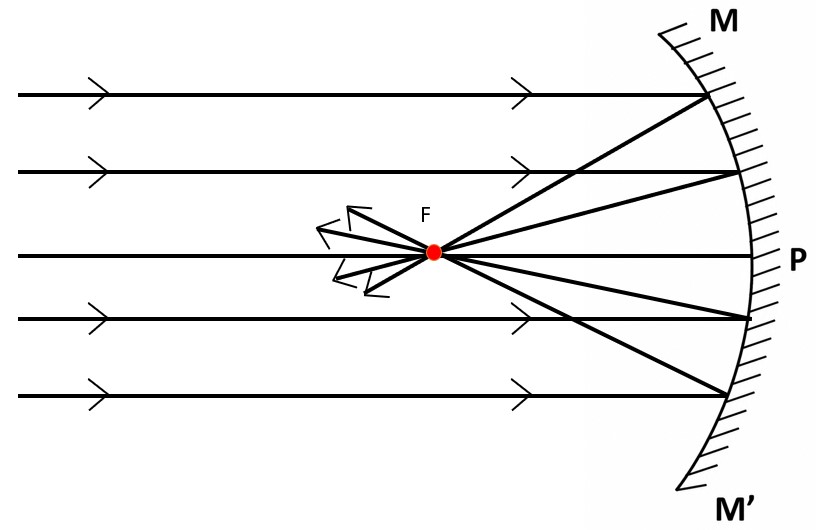
Convergent Rays :
When a bundle of parallel light rays falls on a smooth surface and, after reflection or refraction, the rays meet at a fixed point, the rays are called convergent rays.
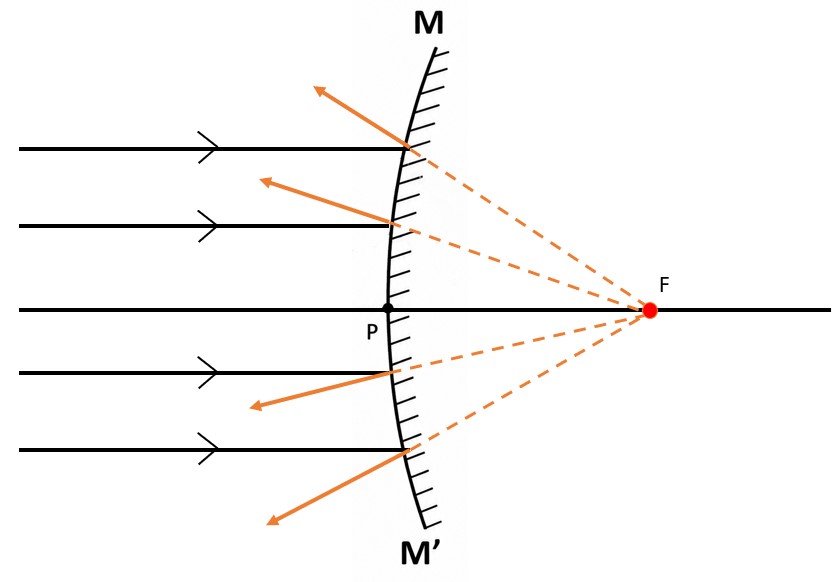
Divergent Rays :
When a bundle of parallel light rays falls on a smooth surface and, after reflection or refraction, the rays appear to come from or spread out from a point, the rays are called divergent rays.
Reflection of Light with Diagram and Explanation
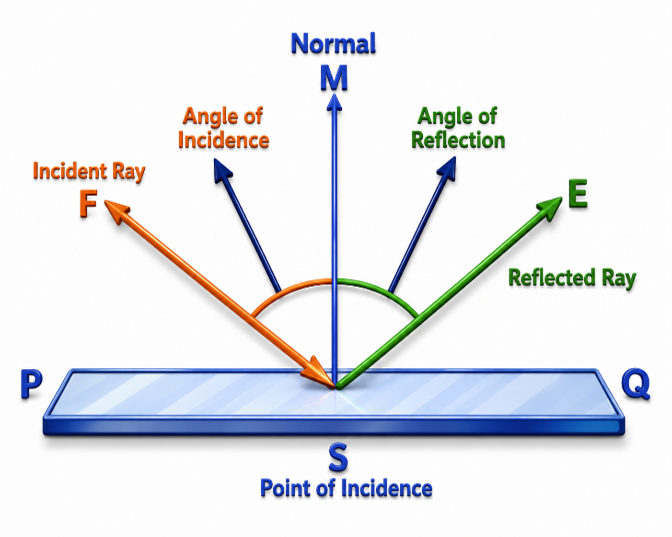
Normal :
The perpendicular line drawn at the point of incidence is called the normal.
Angle of Incidence :
The angle formed between the incident ray and the normal is called the angle of incidence.
Reflected Ray:
The ray that emerges from the point of incidence after reflection is called the reflected ray.
Angle of Reflection:
The angle formed between the reflected ray and the normal is called the angle of reflection.
Laws of Reflection of Light
First Law:
The incident ray, the reflected ray, and the normal drawn at the point of incidence all lie on the same plane.
Second Law:
The angle of incidence is equal to the angle of reflection.
Mirror
A mirror is a kind of smooth surface where regular reflection of light takes place.
How is a mirror made?
A mirror is made by coating one side of a glass sheet with a thin layer of silver metal. This process of applying a metallic coating on glass is called silvering.
Types of Mirrors:
Mirrors are of two types:
➢Plane mirror
➢Spherical mirror
Plane Mirror:
A mirror whose reflecting surface is smooth and flat, and where regular reflection of light occurs, is called a plane mirror.
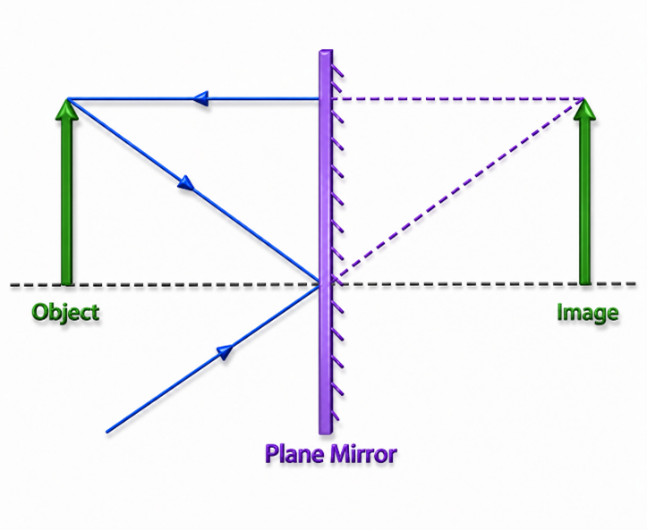
Characteristics of a Plane Mirror :
➢The image formed by a plane mirror is at the same distance behind the mirror as the object is in front of it.
➢A plane mirror forms an upright and virtual image.
➢A plane mirror causes lateral inversion (side reversal) of the image.
Spherical Mirror:
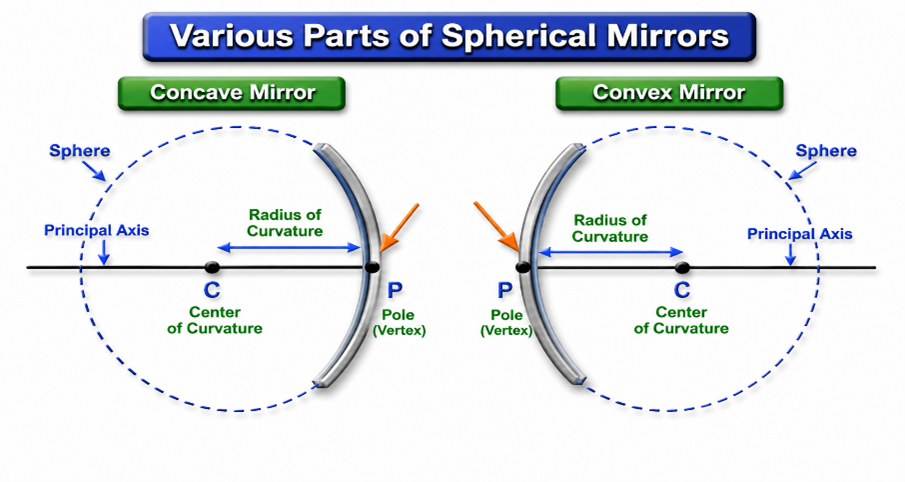
A mirror that forms a part of a sphere, has a smooth surface, and produces regular reflection of light is called a
spherical mirror.
Types of Spherical Mirrors :
Spherical mirrors are of two types:
➢Convex mirror
➢Concave mirror
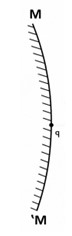
Convex Mirror
A spherical mirror whose outer surface is smooth and reflects light regularly is called a convex mirror.
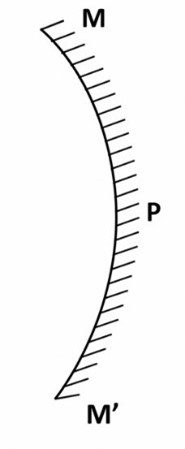
Concave Mirror :
A spherical mirror whose inner curved surface is smooth, acts as the reflecting surface, and produces regular reflection of light is called a concave mirror.
Important Terms Related to Spherical Mirrors
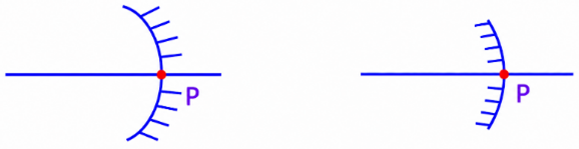
Pole :
The midpoint of the reflecting surface of a spherical mirror is called the pole.
In a concave mirror, the lowest point is the pole, and in a convex mirror, the highest point is the pole. It is denoted by P.
Center of Curvature :
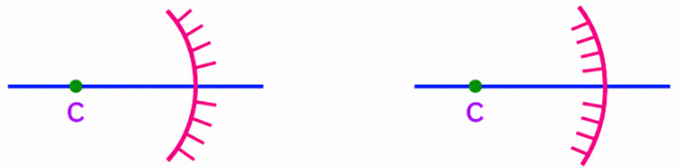
The center of the sphere of which the spherical mirror is a part is called the center of curvature. It is denoted by C.
Radius of Curvature :
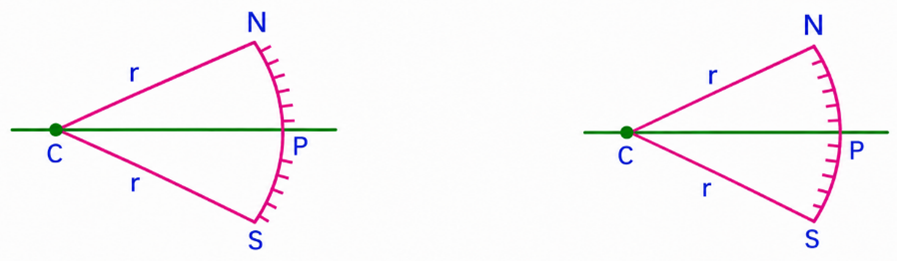
The radius of the sphere of which a spherical mirror is a part is called the radius of curvature. It is denoted by r. Or, The distance between the center of curvature and the pole of a spherical mirror is called the radius of curvature.
Principal Axis :
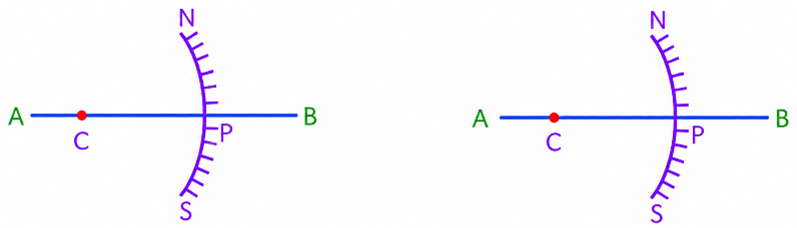
The straight line passing through the pole and the center of curvature of a spherical mirror is called the principal axis. It is represented by AB.
Principal Focus :
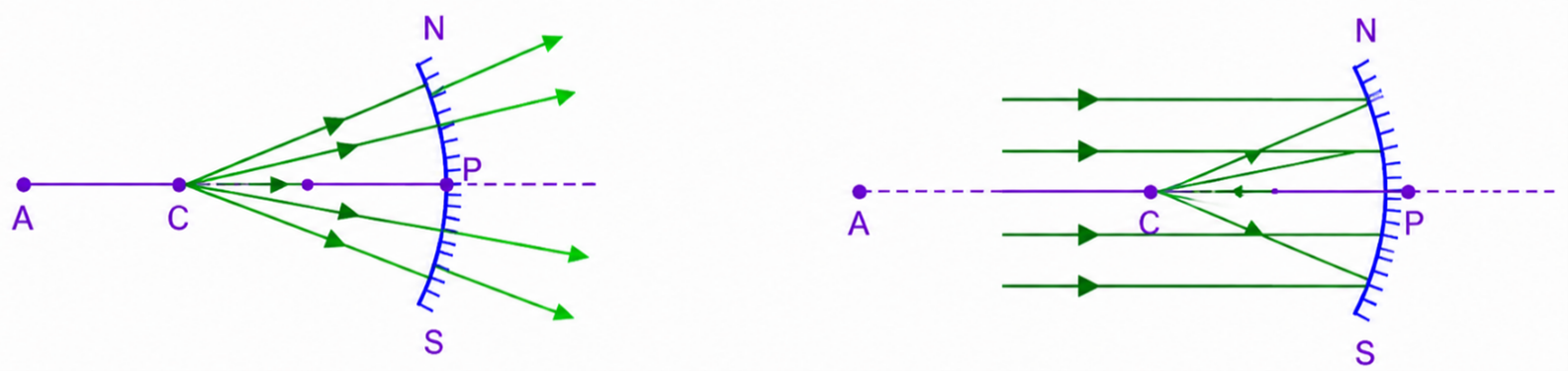
When a bundle of light rays parallel to the principal axis falls on a spherical mirror and, after reflection, either meets at a point or appears to diverge from a point, that point is called the principal focus. It is denoted by F.
Focal Length :
The distance between the pole and the principal focus of a spherical mirror is called the focal length. It is denoted by f.
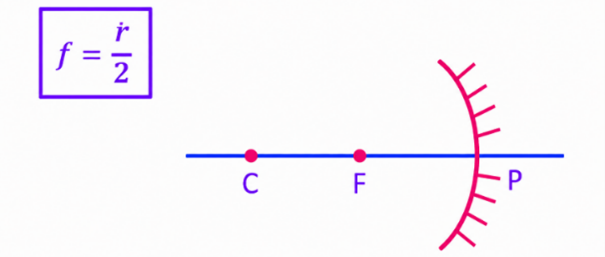
Image
When a bundle of light rays coming from a point falls on a surface and, after reflection or refraction, the rays either meet at a definite point or appear to come from another point, it is called an image.
Types of Images :
Images are of two types:
➢Real image
➢Virtual image
Real Image :
If a bundle of light rays from a point falls on a surface and, after reflection or refraction, the rays actually meet at a definite point, then the image formed is called a real image.
Virtual Image :
If a bundle of light rays coming from an object falls on a surface and, after reflection or refraction, the rays appear to come from a definite point, then the image formed is called a virtual image.
Direction of Reflected Rays in a Mirror
1. Ray Parallel to the Principal Axis :
When a light ray parallel to the principal axis falls on a mirror, after reflection the ray passes through the principal focus.
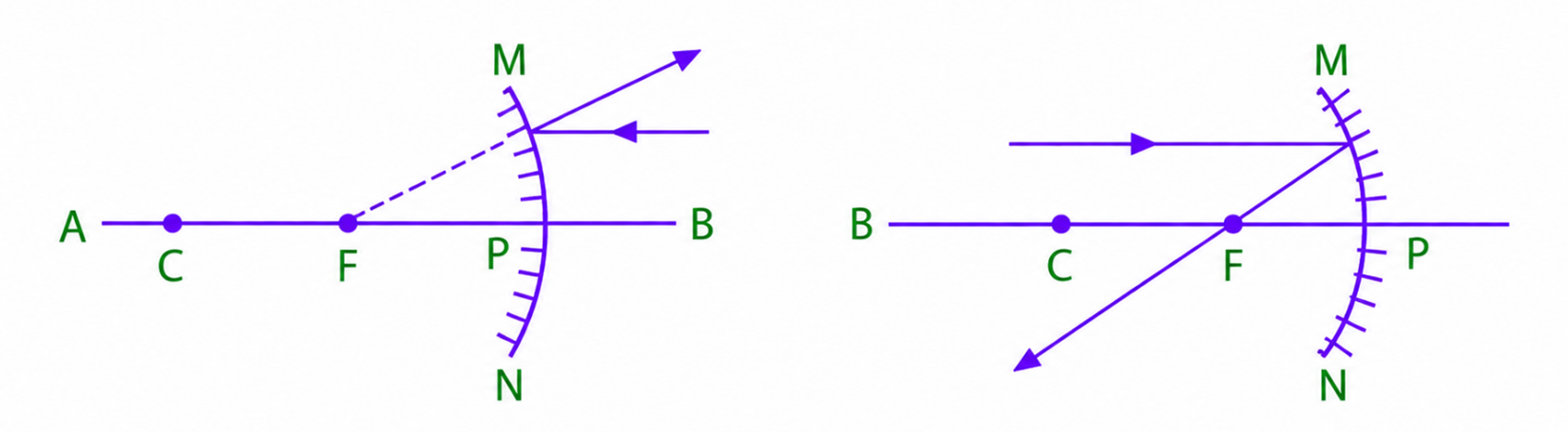
2. Ray Passing Through the Principal Focus :
If a light ray passes through the principal focus before striking the mirror, then after reflection the ray travels parallel to the principal axis..
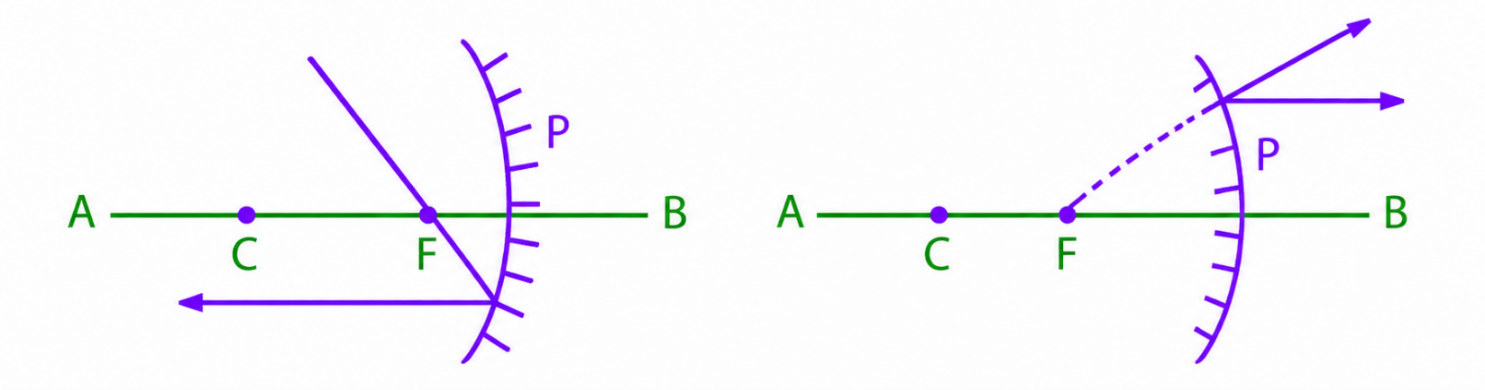
3. Ray Passing Through the Center of Curvature
If a light ray passes through the center of curvature before striking the mirror, then after reflection the ray retraces its original path.
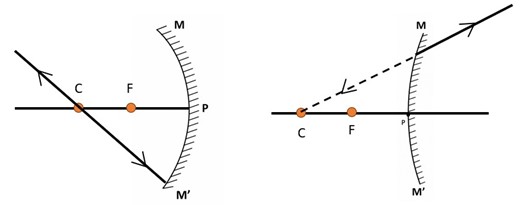
An easy method for determining the position of the image in a concave mirror
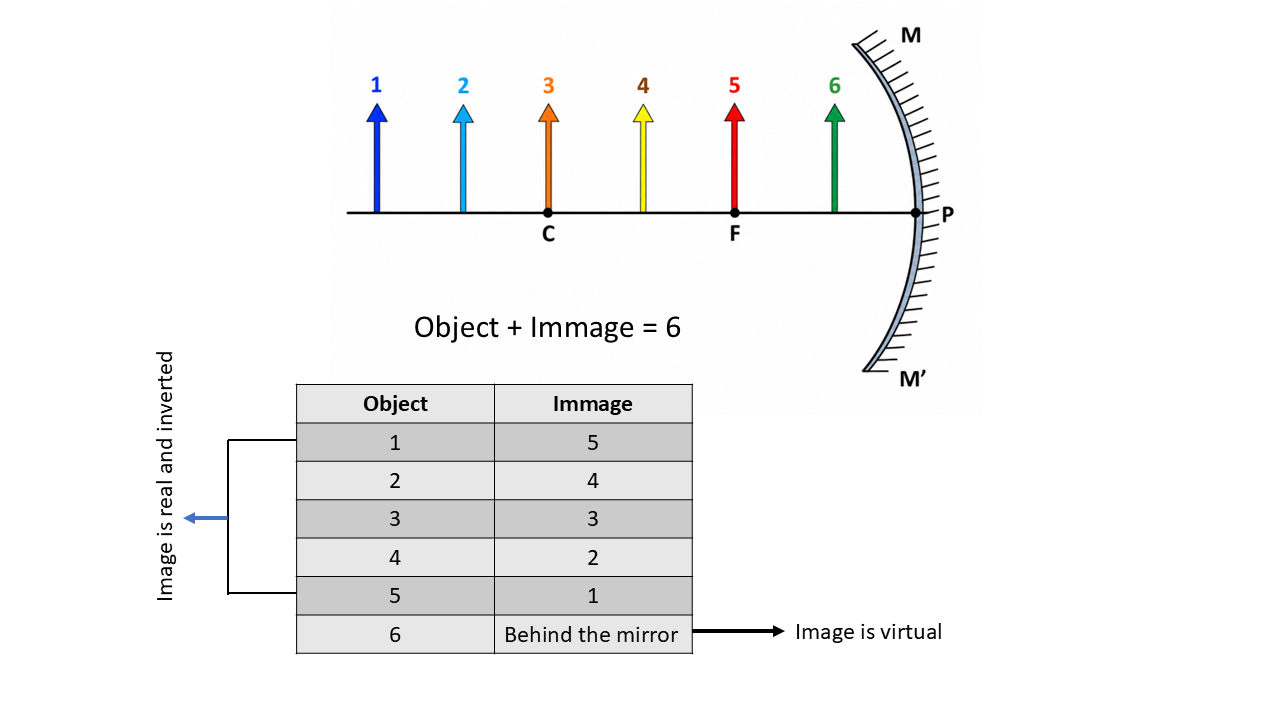
Concave Mirror
When the object is placed at infinity in a concave mirror:
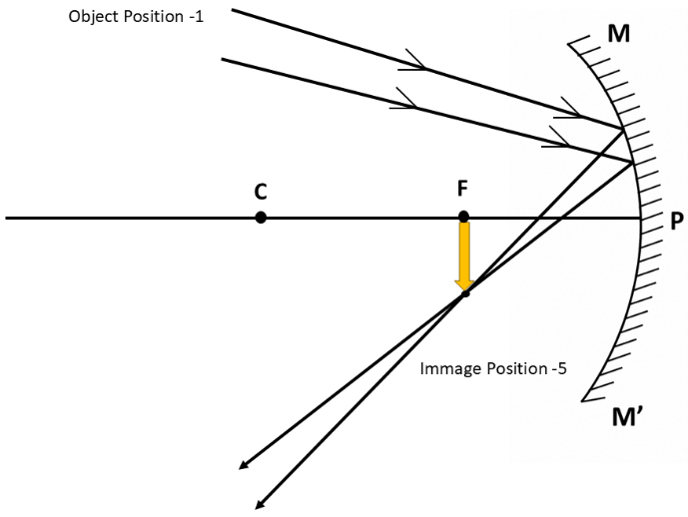
Position of the image: At the principal focus (F)
Size of the image: Highly diminished (very small)
Nature of the image: Real and inverted
When the object is placed between infinity and the center of curvature in a concave mirror:
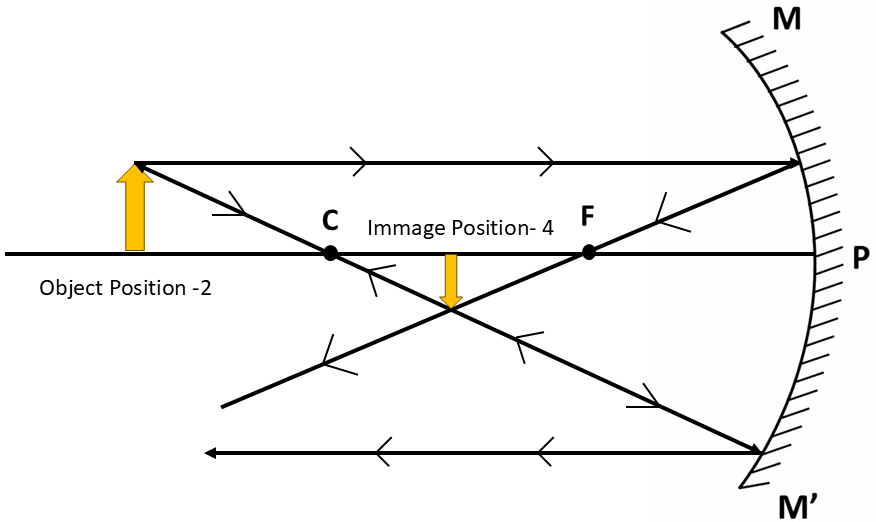
Position of the image: Between the principal focus (F) and the center of curvature (C)
Size of the image: Diminished (small)
Nature of the image: Real and inverted
When the object is placed at the center of curvature in a concave mirror:
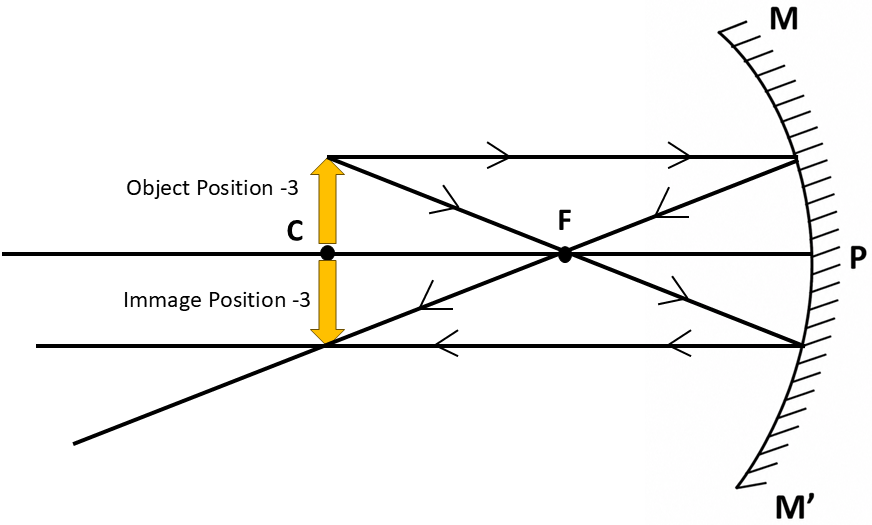
Position of the image: At the center of curvature (C)
Size of the image: Same size as the object
Nature of the image: Real and inverted
When the object is placed between the center of curvature (C) and the principal focus (F) in a concave mirror:
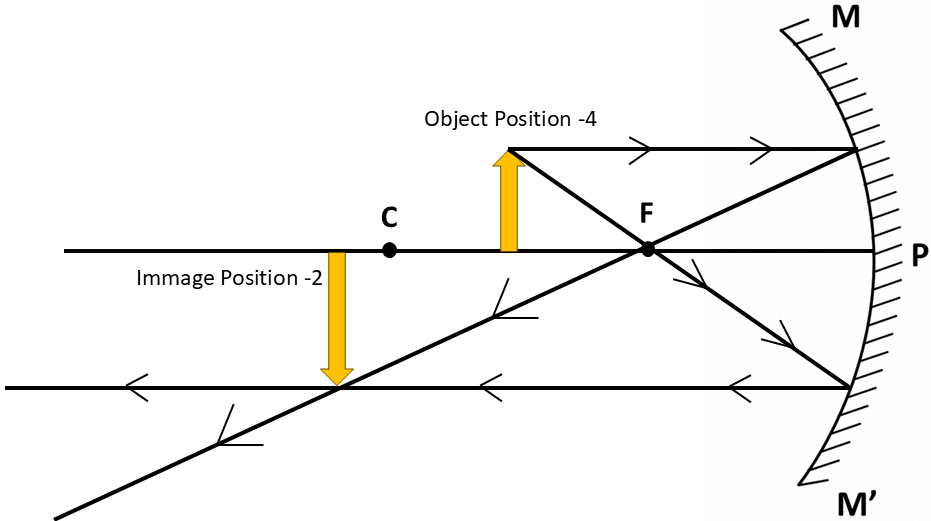
Position of the image: Beyond the center of curvature, between C and infinity
Size of the image: Magnified (large)
Nature of the image: Real and inverted
When the object is placed at the principal focus (F) of a concave mirror:
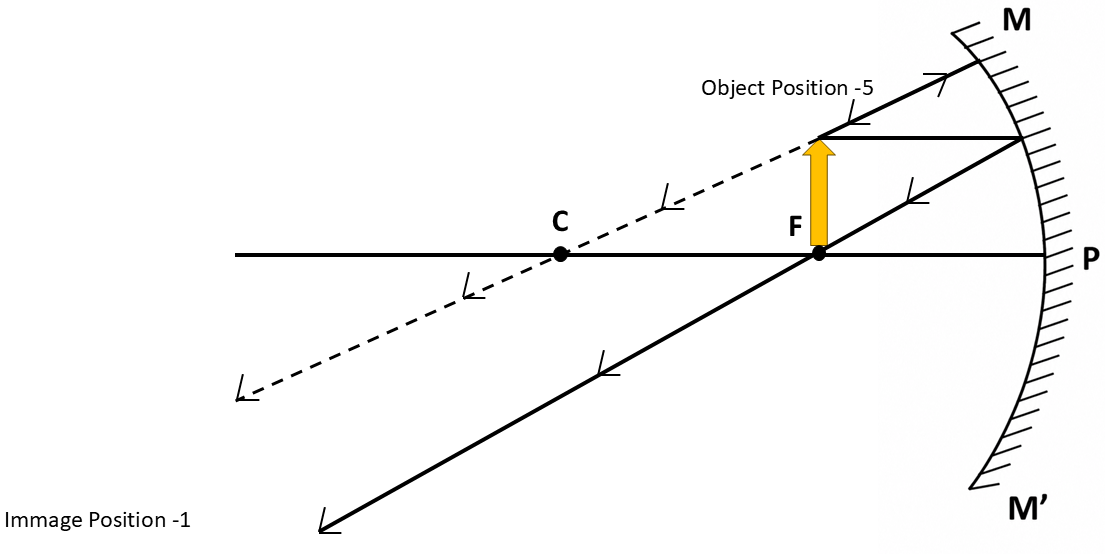
Position of the image: At infinity
Size of the image: Highly magnified (extremely large)
Nature of the image: Real and inverted
When the object is placed between the principal focus (F) and the pole (P) of a concave mirror:
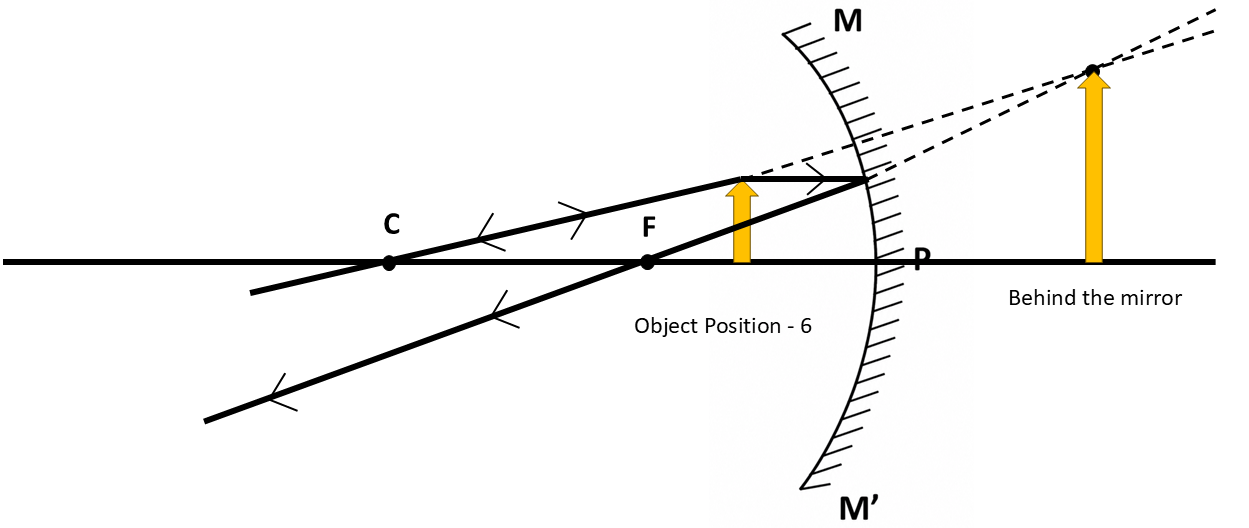
Position of the image: Behind the mirror
Size of the image: Magnified (large)
Nature of the image: Virtual and erect (upright)
Convex Mirror
For a convex mirror, when the object is at a infinity distance :
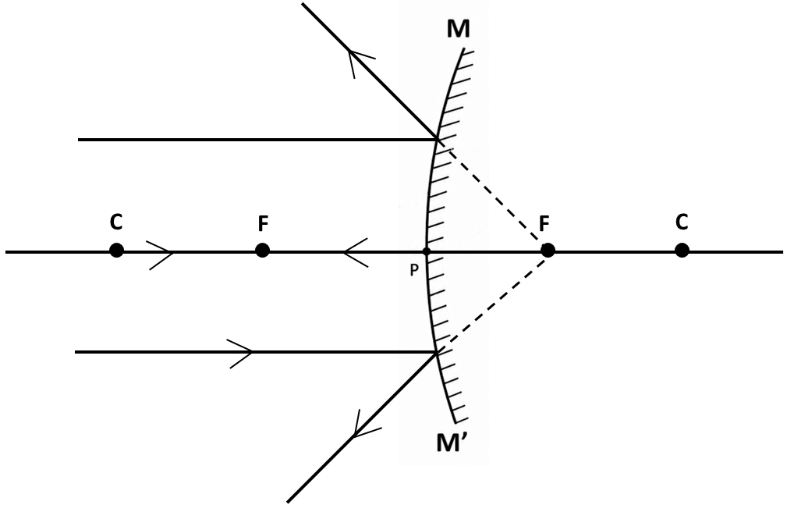
Position of the image: At the principal focus (F) behind the mirror
Size of the image: Highly diminished (very small)
Nature of the image: Virtual and erect (upright)
For a convex mirror, when the object is at a finite distance :
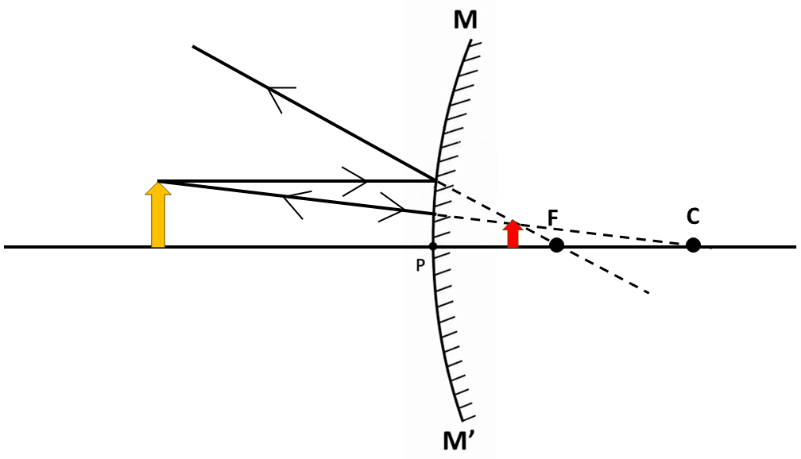
Position of the image: At the principal focus (F) behind the mirror
Size of the image: Highly diminished (very small)
Nature of the image: Virtual and erect (upright)
Proof: In a spherical mirror, the focal length is half of the radius of curvature 
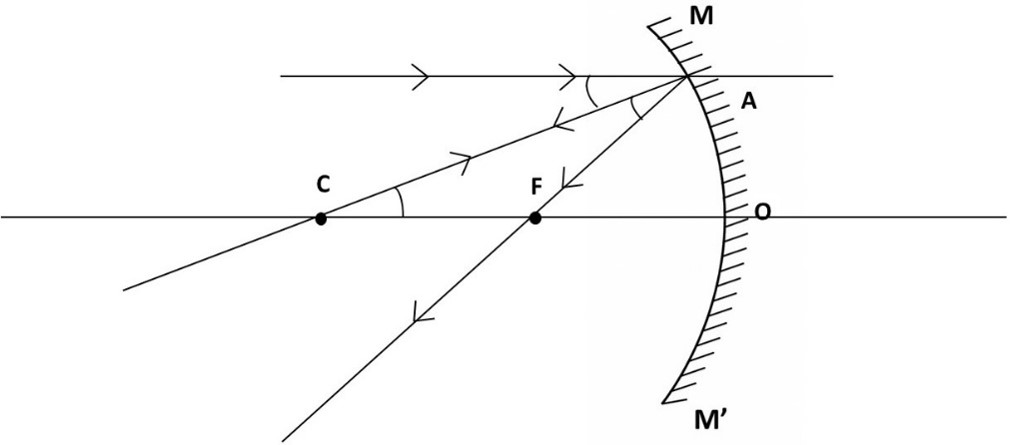
Let,  be a concave mirror.
  is the center of curvature of the mirror and O is the pole.
  ray
ray  , parallel and close to the principal axis CO, falls on the mirror at point A.
Join CA. Since CA is the radius of curvature, it is the normal drawn to the mirror at point A. If the angle of incidence is  and the angle of reflection is ∠CAF, then AF is obtained as the reflected ray. This reflected ray cuts the principal axis at point F. Therefore, F is the principal focus of the concave mirror.
Now, according to the law of reflection,
∠PAC = ∠CAF
Again, since and  are parallel,
 [alternate angles]
Now, in 

Therefore, 
Hence, △AFC is an isosceles triangle.
Again, if  is very small, then
 can be written.
Therefore,
Now,
Therefore,
Or, CO = 2CF
So, CF =  CO
CO
Or, f = 
Therefore, 
(Proved)
Magnification
Magnification, or linear magnification, is the ratio of the length (height) of the image to the length (height) of the object. It is denoted by m.

Magnification can also be determined by using the image distance and object distance.
👉If the value of m is negative, the image is virtual and erect.
👉If the value of m is positive, the image is real and inverted.
Uses of Mirrors
Plane Mirror:
✅️We use plane mirrors to see our faces.
✅️Eye specialists use plane mirrors to help patients read letters during eye examinations.
✅️Plane mirrors are used in making periscopes.
✅️They are used on curved mountain roads to help avoid accidents.
✅️Plane mirrors are used in various optical instruments such as telescopes, overhead projectors, and lasers.
✅️During drama or film shooting, plane mirrors are used to reflect light and increase the brightness of a place.
Concave Mirror:
✅️Concave mirrors of suitable shape produce enlarged and upright images of the face, which helps in makeup and shaving.
✅️Dentists use concave mirrors.
✅️Concave mirrors are used as reflectors in devices such as torches and searchlights of steamers or launches to direct light.
✅️Concave mirrors are used to concentrate light and heat energy to heat objects. They are also used in collecting radar and TV signals, such as in dish antennas, solar furnaces, telescopes, and radar collectors.
✅️Since concave mirrors can focus light rays at a point, doctors use them while examining the eyes, nose, ears, and throat.
Convex Mirror :
✅️Convex mirrors provide a wide field of view, so they are used for security purposes in shops and shopping malls.
✅️They are used in making reflecting telescopes.
✅️Since convex mirrors spread light rays over a wide area, they are used as reflectors in street lights.

Edutrack BD
শিক্ষার আলো ছড়িয়ে দিতে আমরা প্রতিশ্রুতিবদ্ধ। নির্ভরযোগ্য নোট, সাজেশন, গাইডলাইন ও সহজ ব্যাখ্যার মাধ্যমে শিক্ষার্থীদের সফলতার পথে এগিয়ে নিতে Edutrack BD সবসময় পাশে আছে। শেখা হোক সহজ, প্রস্তুতি হোক স্মার্ট।
Categories
- Chemistry (2)
- Class 8 (4)
- General Math ( Bangla Version ) (2)
- Higher Math (2)
- HSC (10)
- HSC Physics 2nd Paper Notes ( English Version ) (1)
- ICT (2)
- ICT ( English Version ) (1)
- Math (1)
- Math ( English Version ) (1)
- Physics ( Bangla Version ) (1)
- Physics ( Englisg Version ) (1)
- Science ( Bangla Version ) (1)
- Science ( English Version ) (1)
- SSC ( Bangla Version ) (1)
- SSC ( English Version ) (9)
- Uncategorized (1)